

|
||
|
|
|
 |
||
|
|
|
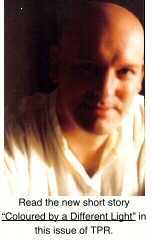 |
Coming from a background in television drama, first as an assistant cameraman then as a technical advisor on military drama, all Tim Rees's former creative experience had been a collaborative affair. "A few months after joining the BBC Wales Film Unit the then Head of Drama, John Hefin, approached me with a proposal to make a film based on my view of the Falkland Islands War where I'd fought with the 1st Battalion Welsh Guards. My specialisation in the army was intelligence, so I had a pretty good grasp of the facts. The resulting drama was broadcast as a primetime 'Play For Today' titled 'Mimosa Boys' after the ship 'Mimosa' that had sailed from Liverpool to Argentina in 1865 with the Welsh men and women who colonised the area in Argentina that came to be known as Patagonia. 'Mimosa Boys' starred my friend Owen Teale [1997 Tony award for 'A Doll's House']. After 'Mimosa Boys' I went on to advise on 'Bonds' an interpretation of a poem about war and then advised on six plays for BBC Belfast collectively titled 'Ties Of Blood', a series of drama that was broadcast on BBC2. During that time I was constantly re-writing scenes and dialogue, so I suppose it was then that I became, almost by chance, a professional writer, although, since I can remember, I've been playing with one story or another in my imagination. Between advising, I worked on many film productions including 'New World', a film written by William Nicholson ['Shadowlands']. BAFTA award winner Norman Stone directed and James Fox starred. It was a marvellous experience working with artists of that calibre, but I ached to write my own material, something that is virtually impossible when going from one drama project to the next. I needed to take control, so finally I left the BBC." |
|||
|
|
|
|
|
Film makers are generally perfectionists, so there is a permanent battle of wills being waged. It was that constant need to compromise his vision of a story that eventually drove Tim from the screenplay to writing the novel. He believed he would be free to allow a story to develop naturally in a novel, without time constraints and artistic compromise. "When writing for film or television," he says, "the writer's job is to lay down the bones. It is the director and actors that flesh out a character and bring a story to life. I believed that in the novel I would have absolute control. I truly hadn't figured on the characters taking control and making decisions for themselves. Every scene is a buzz to write because I really don't know how the characters will tackle and solve any given situation. Too often they surprise me. They're very much their own people -- individuals with strong personalities that refuse to be bullied along a fixed plot by me. I still work to a plot, but a very loose plot because I know that it is going to change. I haven't yet completed a story with the ending I'd originally intended. "Inspiration comes in many forms. From the smile of a child in the street or a seemingly unanswerable question one asks oneself an idea is born. The idea metamorphoses into concept and the concept weaves itself into plot. For my first novel Internecine: The Extremists I asked the question, 'Why did General Colin Powell refuse to run for the presidency?' Upon that simple question the story was conceived. "After leaving the BBC I won the Sunday Express short story competition with my story 'Connie: Ninety-Two Years Young' and last year a television producer commissioned me to write a story with a twist. The result was broadcast by the BBC last July. Soon I must go and seek out more commission work in television, but in the meantime, my great passion is writing the novel, where I place imagination and entertainment as the priority of my work. My second novel is almost complete with the third plotted, researched and ready to be written. "But my dream is an impossible one in literary terms: I would like to someday paint inside the blind man's eyes the colour green." Now Rees tackles a different problem -- the insolvable balancing game between genre and literary work that is the bain of every editor -- in his short story "Moonshine". |
||
|
|
|
 |
||
|
|
|
Maybe it's this city? Could be I'm addicted to this buzz -- this race to get ahead? I arrived here to sign a publishing contract with the intention of returning on the next flight home to Wales. Ten years and seven novels later, I remain entangled in the web of New York. Okay, I moan about the weather here, too cold in winter and, like right now, too humid in summer, but whoosh! New York! New York! Yes, I still sing the song and marvel that I'm here. I still gaze up at the Empire State' and see it disappear into infinity, jaw agape every time. Typical Brit. My name is Roger Winger and I'm a successful novelist -- well, my stories have found a big international audience, but successful? . . . In one way, yes, but in another . . .? Before I had money, success meant getting my hands on the stuff. Now that I've got money success means acceptance and respect. I have an abundance of both from the public, but from my peers . . .? Lost in thought, I suddenly remember that I've a meeting to attend and my agent is not a woman to be kept waiting in a bar. Felicity is sat on a tall stool like she's stranded. The bartender's cleaning some glasses at the far end talking to a small group clustered around a table. I saunter casually across and peck Felicity's cheek that she has lifted to the Arctic breeze humming from the air-conditioning. I mutter a "hi" and look at the tall glass of freshly squeezed orange juice standing untouched in front of her. The glass looks frosted and a crushed iceberg waters the deep orange to half way. It looks good, and I tell myself to have one and remain sober, but somehow or other the word "Guinness" echoes from my mouth the moment the barman nods in my direction. Felicity narrows her eyes and twists her mouth in accusation. I ignore the look and offer a feeble "sorry I'm late." She's an attractive woman in her own way; strong character rather than classic beauty shapes her face. She's always power-dressed, so I hesitate to use the word sexy, but she does have a potent feminine sensuality. I like that. Early on in our professional relationship there was a moment when our mutual like spilled over to intimacy, but . . . . Anyway, the mutual like persists and we have remained good friends, although I sometimes feel that I'm a bit of an embarrassment because of the style in which I choose to write. In her view, genre, as she labels my novels, is beneath me. She has so-called literary authors on her books, but they don't earn her as much income, so she's careful not to push it. "Rathbones want to sign you for six more books," she opens bluntly. "They've offered six and a half million, but I'm going to hold out for eight, seven at the very minimum." "I don't want to tie my hands to deadlines, you know that," I smile pompously, knowing that will be the requirement at that sort of figure. I'm already a millionaire who's lost count, so financial seduction is a toothless ploy. There's a principle at stake here. Felicity sniffs. She wants her fifteen percent and is annoyed at my depriving her of a big lump sum rather than waiting for the royalties to pour forth, but we've had this conversation before. I'm stubborn and she knows it -- or so I like to tell myself. "How about that wildlife project you're sponsoring? Bet it could use the money," she jabs, but gently. I laugh loudly. The Guinness has been placed on a mat in front of me. I swallow half in two gulps. Coffee coloured froth forms a moustache. Felicity cocks an eye and wipes my mouth with a napkin. "Thanks," I grin, enjoying the attention. "Look, I admit it's tempting," I continue, forcing my tone to be more business-like, "but it's a promise I made to myself. They'll want those six novels in six years, meaning I'll have to rush write. Hate that. Whatever you and your cronies think about my work, I take my stories seriously. They're my babies. Forcing their development to meet some editor's deadline will result in them being less than their potential. You don't want that, do you? I certainly don't." She sips her orange then rattles the ice in thought. Her natural, gifted sense of diplomacy wouldn't allow her to meet me head on, but I'd learned from experience that she could tiptoe through an argument and cleverly get her way. She enjoys the banter. "They'll agree to stretch deadlines . . . Surely there's six more books in you where Jason Cole can put the world to rights?" A superior smirk twitched the corner of her mouth, itching to take hold and tease me more boldly, but she kept tight control on that desire. I could almost see fifteen percent hauling back the reins. "So now you're eager for me to write Jason Cole stories? That's a new one!" I openly accuse. Her face softens and the near-smirk is cleverly replaced with convincing sincerity. "Your readers love him. He's good genre." I sigh heavily. I don't need this. My own agent condemning my work to the junk pile of so-called genre. "Thanks a bunch," I growl. "Oh, come on, don't sulk. I know you're capable of . . . well, more literary work," she continues, soothingly. "I've read those short stories you wrote when starting out, remember . . . . " My stomach is tightening. Increasingly I feel an argument coming on. "So get the short stories published if they're so bloody good?" I challenge. She takes another sip of orange and pinches the bridge of her prominent nose. "You know I'd happily traipse them around the publishing houses, but it would have to be under a pseudonym. You've established a readership for your thrillers under your real name. Your readership would reject the style in which you wrote those short stories." "Yeah! Right! Too literary I think you said before!" I'm getting angry now. Felicity touches my shoulder and beams a placating smile. "Let's not fight over this again. We can't force the industry to play by your rules. The marketing machine is too powerful to resist. You're an established author with a readership demanding certain criteria. You're a massive success because the system works, so don't expect the industry to feel sorry for you. All I'm saying is that we can publish different styles, but we have to do it under a different name. The writer known internationally as Roger Winger is genre. Deal with it." "Genre! I hate that word!" Spittle has showered her. "Sorry," is a terse and insincere apology. She wipes a hand over her eye and flicks it as if she's dripping. I sigh and meet her eyes, seeking out the bond that binds us as friends rather than professional teammates. I see it's reflected back and relax. "I am sorry," I insist, inflecting my voice with genuine feeling. "Genre is only a word," Felicity smiles. "You writers are just too sensitive . . ." Her eyes are openly mocking. I know the look; I would rant and she would pacify me with logic. The truth is it's the core of our excellent working relationship. Maybe I should have grabbed her when I'd had the chance? . . . She had never married -- career came first. I had married, divorced and been taken to the cleaners. Now I live on my own and am wary of all she-devils ulterior motives -- Felicity included. I open with a passive statement. "There's nothing wrong with the word, I don't have a problem with the word, it's the way your literati friends utter it with contempt that I have an argument with!" "Now then . . . " She twitches her nose in gentle warning. "There's no need to disparage my professional colleagues," she smiles, brushing my long hair over my ears and away from my face before continuing, "Literature is a writer's unique, free-flowing, often experimental voice. Genre, on the other hand, defines an established storyline and plot structure, written in a style that demands certain criteria. It is only used in reference to a particular type of story." "Bollocks!" I explode. "The word is used to pigeonhole works that are perceived to be inferior; stuff from writer's like me." "Come on! I've just admitted you can write literature, it's just not evident in your novels." "The fantasy versus reality argument? In my view it's potential reality V slice of life, rock music V opera, imagination versus real life experience-" "Okay," Felicity halts. "I've heard it already. You finish by explaining how Einstein used his imagination to conclude that E=MC^2. I admitted you had a point when we went over this ground before. I will go on to argue that there's intelligence at work in literature that is not evident in genre. You agreed with me last time?" "No I didn't," I protest, but weakly I had agreed with her. I didn't need the hassle that day. I slump in my tall bar stool and guzzle the remaining half of the Guinness. The barman notes the drained contents. I've been here too often, obviously. He has another ready. "Thanks, mate," I nod at him. "You're welcome, Rog. Have a nice day," he winks and retreats. He's been behind a bar long enough to recognise a business meeting. If I had been on my own he would have stood in front of me cleaning glasses and listening attentively to all my worldly woes. I love New York bar staff and must know all of them -- or is it that they know me? Strange. When you're a recognised face, those things get confused. "Explain more intelligent to me again," I propose to her, keeping my voice to a soft, pleasant tone with just a trace of acid. "Just to re-acquaint myself with your educated perspective." Felicity rests her chin in her hand and gazes at the ceiling for a second. "Well composed prose, more philosophical, more carefully phrased . . . Want me to go on?" I allow my lips to belie the faintest smile. "So bags of similes and metaphors, huh? So, leaving me out of it so we don't get personal here, you're saying that Clancy and Grisham write less than intelligent stories or tell their stories less than intelligently?" "No they're good storytellers. I read them myself when I read for pleasure-" "Ah!" I interrupt. "The suggestion here is that your main literary diet is less than pleasurable?" "As ever you're twisting my words," Felicity grimaced, but she knew I had her on the ropes. "I derive a great deal of pleasure from reading well written prose, you know that." "But if you want to read a good story you pick up Clancy or Grisham?" I push. "Or you," she smiles, sucking her upper lip and widening her eyes innocently. "You're a hypocrite," I accuse too bluntly and immediately feel guilty. She is, after all, a friend. "No I'm not." Her voice sounds unperturbed, but she shrugs on her oblique, professional facade, which I read as evidence I've hit a nerve. "Unfortunately I've read all the last century's great literary novelists like Lawrence, Hemingway and Wolfe --" " -- Not forgetting Michener," I inject quickly. "Yes, you like him, don't you? He's good." "A great novelist in my humble -- genre -- view," I stab. "But first and foremost, before you and your cronies labelled them literary, they were simply great storytellers," I argue. "Every writer aspires to their sublime eloquence. We all set out to be the next Hemingway, but we all tell our stories in our own unique fashion. I'm considered so-called genre because I like to inject pace, pace demands dynamic images and language and definitely less prose. It's not that I don't like prose, there's just no room for it in a thriller unless one needs to slow pace, and I enjoy writing a thriller. I like developing a concept into a plot. I like the energy of each scene having to have purpose rather than allowing a character to ramble on about some self-indulgent philosophy. My characters have a job to do and they get on and do it." "That's fine then. You're good at it so stick to it. But if you want your work to be viewed seriously, then get away from the he-man heroes you create. Write a book where the hero is a professor who has to solve some universal crisis?" I begrudgingly mutter a "maybe", but am unconvinced. I want to push this argument further. "Edgar Rice Burroughs wrote 'Tarzan'," I mutter disconsolately. "A he-man fictional character who's achieved legend status and quite rightly so in my opinion. Forget the films, the stories are a great study in one man's evolution resulting in a thought-provoking misanthropic perspective. A work now pigeonholed 'boys' adventure'! What a waste! Crime even! The basic concept alone challenges most adults! Then we have Ian Fleming's 'Bond', a character that has entertained generations!" "Great escapism. I agree." Felicity pursed her lips. "But don't ask me to take them seriously." "Why not! They inspire individuals to aspire! The two characters are virtual cultural icons!" "Yes but -- " " -- But nothing! What makes a great writer? The prose or the story?" "Come on," Felicity soothed with a chuckle. "You're not telling me that Fleming was a great writer? It's the films that have made 'Bond' the icon. Same with 'Tarzan'" "What I'm saying is that the characters that they created from their imaginations have had a bigger impact on society than some of your more literary considered authors. My point is that it is the story that is all-important. 'Bond' wouldn't be 'Bond' in anything less that a great story! You have to be a pretty damn good writer to communicate a story to a mass audience, and both Fleming and Burroughs achieved that and more . . ." Felicity remained silent and sipped her orange. I was on a roll. "I'm not saying that the bigger the audience the better the writer, but I do say the bigger the audience the better the storyteller, and the foundation of fiction is good storytelling. So why in publishing is a writer who communicates to a wide audience made to feel like a third rate hack? Look at Clancy and Grisham? Pooh-poohed as irrelevant writers, yet their only crime is telling a good story." "Yes, but publishing also has to be about good writing first and foremost." "But I'm published, so by your definition I suppose that must mean I'm a good writer?" "Of course," she openly laughs. "My home on Long Island is due to the fact that you're a damn good writer." "Yet you also agree with your colleagues when my work is condemned as irrelevant genre?" "No I don't. I argue that behind every novel you've written is a moral significance desperate to get out." Her laughter at her own joke sings like china bells. I'm forced to smile. It is genuinely funny. She is in full flow now and loving every minute. "But I explain that you are happy reaching a less educated -- I mean, more popular audience," she finished, almost stumbling on the faux pas. I wasn't about to let it ride. "There we have it! The snob factor!" "Not at all. Literary taste is like wine, we all prefer different vintages." She uttered the sentence with blatant snobby delight and patted her own back in punctuation. "Yeah! Right! But when you want to get pissed, you dive into something with a bit more zap, like a good Clancy, Grisham or . . . ?" Reference to my work is lost in my own laughter. "That's it!" She erupted with exultant joy. "You guys write the moonshine!" "Yeah! To satisfy your prohibitionist lust!" I finished the second Guinness quickly. I didn't have long to wait for the next. Having a known, populist, commercial face has its merits. "So do we accept seven to eight mil?" She asks, her whole demeanour one of total innocence. I'm on my third Guinness. "Okay, go for it," I sigh. "I'll write another six books that you and your friends can laugh at. Then I'm off to buy an island in a remote corner of the Indian Ocean and write literature that will make your toes curl." |
||
|
|
|
 |
||
|
|
|